How a Nexorium mat gets made.
Six steps from raw compound to a banded pallet. Nothing exotic — just consistent gauge, cure and cut, checked before it leaves.
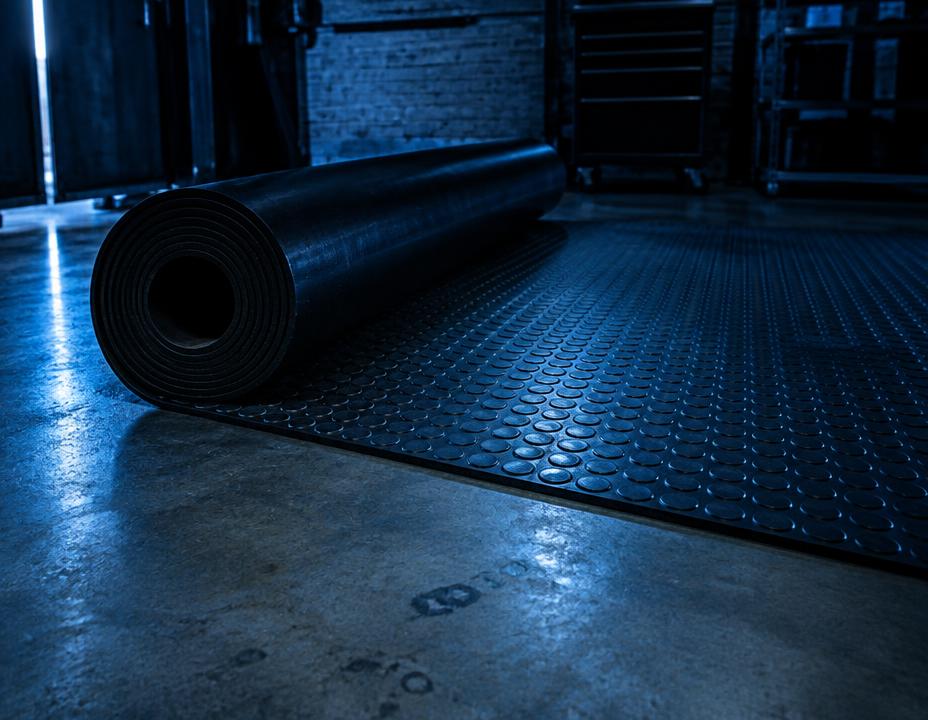
Compound selection
We choose the base polymer for the floor it will live on — SBR for general industrial wear, nitrile where oil and cutting fluid are present, natural rubber blends for wet-area traction, bound crumb for impact absorption.
Mixing and milling
Raw polymer, fillers and curatives are mixed to a set recipe, then milled into sheet stock at the target gauge. Each batch is logged so a finished mat can be traced back to its mix.
Molding and pressing
Sheet stock is pressed in heated platens against the tread pattern — diamond, fine-rib, open-grid or smooth — which cures the rubber and forms the profile in one operation.
Cutting and punching
Cured stock is trimmed to stock sizes or die-cut and water-jet cut to customer drawings, including drainage holes, cable slots and equipment cut-outs.
Finishing
Edges are beveled or tapered where the mat meets traffic, interlock tabs are trimmed to fit, and inlaid color is set for logo mats.
Inspection and packing
Thickness, dimensions and surface finish are checked against the spec sheet before mats are rolled, banded or palletized for freight.
Have a drawing, a cut-out pattern or a compound requirement? Send it over and we'll quote the run.
Request a Quote